# Site Prep: Why Proper Ground Preparation Matters Before Construction
Every successful outdoor building project starts long before the first wall is assembled. Whether the plan involves a storage shed, detached garage, workshop, or small cabin, proper site prep creates the conditions for long-term stability and reliable performance. Investing time in preparing the building site helps reduce future maintenance and supports the overall durability of the structure.
**What Is Site Preparation?**
Site preparation is the process of making land suitable for construction. It involves evaluating the location, clearing unwanted vegetation, leveling the ground, and creating a stable foundation capable of supporting the planned structure.
The exact preparation required depends on the building size, local soil conditions, drainage patterns, and the type of foundation being used.
**Choosing the Right Location**
Selecting an appropriate building site is one of the most important decisions in the preparation process. A location with natural drainage, firm soil, and convenient access often requires less corrective work.
Before construction begins, it is also important to consider property boundaries, utility lines, nearby trees, and local building requirements that may affect placement.
**Clearing the Site**
A clean building area provides a better starting point for foundation work. Grass, shrubs, tree roots, and organic materials should be removed because they can decompose over time and create uneven settling beneath the structure.
Large rocks, debris, and loose material should also be cleared to ensure the ground can be properly graded and compacted.
**Grading and Leveling**
Few construction sites are perfectly level. Grading adjusts the surface to create a stable base while directing rainwater away from the future building.
Proper leveling is essential because an uneven foundation can place unnecessary stress on floors, walls, windows, and doors. Even small differences in elevation may lead to operational problems over time.
**The Importance of Drainage**
Water management is a major factor in site preparation. Rainwater should flow away from the structure instead of collecting underneath it.
Good drainage helps reduce soil erosion, minimizes moisture buildup, and lowers the likelihood of frost-related movement in colder climates. A well-drained site contributes significantly to the long-term performance of the foundation.
**Preparing the Foundation Area**
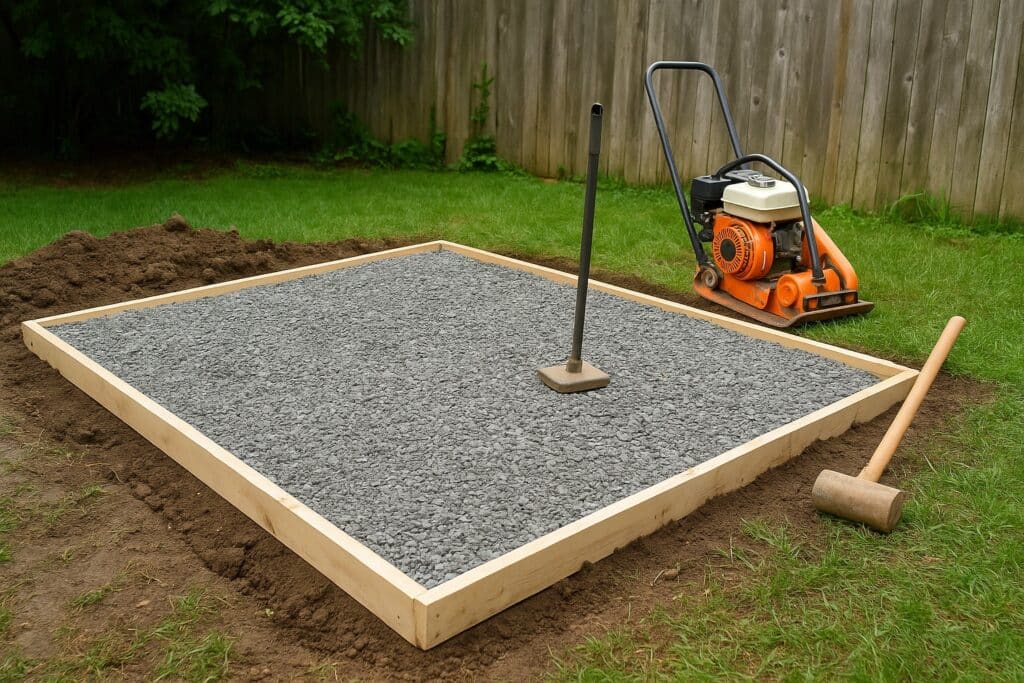
Once the site has been cleared and graded, the foundation area can be prepared. Many outdoor buildings are supported by compacted crushed stone, which creates a stable base while allowing water to drain naturally.
The foundation should extend slightly beyond the edges of the building to improve stability and provide additional protection against erosion around the perimeter.
**Compaction Creates Stability**
Compacting the soil and foundation material is a critical step that should never be overlooked. Proper compaction reduces air pockets and increases the load-bearing capacity of the ground.
Building on loose or poorly compacted material increases the risk of settling, which can eventually affect the alignment and structural integrity of the building.
**Common Site Preparation Challenges**
Every property presents different conditions. Some sites require additional grading due to slopes, while others may have soft soil, excessive moisture, or limited access for construction equipment.
Addressing these challenges before construction begins is generally more efficient than correcting foundation problems after the building has been completed.
**Benefits of Proper Site Prep**
Well-executed site preparation offers several long-term advantages:
* Creates a stable foundation.
* Improves drainage around the structure.
* Reduces future settling.
* Helps protect the building from moisture damage.
* Supports longer structural life.
* Simplifies future maintenance.
These benefits often outweigh the time invested during the early stages of a project.
**Conclusion**
[Site Prep](https://www.siteprep.com/) is one of the most valuable steps in any outdoor construction project. Careful planning, proper grading, effective drainage, and a well-prepared foundation all contribute to a structure that performs reliably for years to come. By establishing a stable base before construction begins, property owners can improve both the longevity and overall performance of their outdoor buildings.